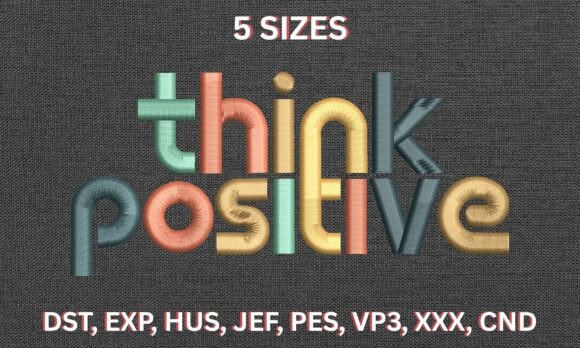
Think Positive Embroidery: A Craft Fair Seller Review
As an embroidery designer preparing for a weekend craft fair, my selection process is rigorous. I do not simply choose files that look good on a computer screen; I select designs that will stop customers walking down a crowded aisle. When evaluating the Think Positive Embroidery design for my upcoming market booth, I approached it with a critical eye toward production efficiency, visual impact, and commercial viability. This modern, geometric typography design promises vibrancy and motivation, but does it translate to sales? Here is my professional assessment of this machine embroidery design for fellow Etsy sellers, boutique makers, and creative entrepreneurs.
First Impressions: Modern Geometry Meets Motivational Messaging
My immediate reaction to the Think Positive Embroidery file is that it strikes a necessary balance between trendy and timeless. In the Inspirational category, many designs lean too heavily into rustic farmhouse aesthetics or overly ornate script. This design, however, feels distinctly modern. The geometric typography suggests clean lines and bold readability, which is crucial for a craft fair product where customers often view items from several feet away.
The "vibrant" description in the product details indicates high thread color contrast potential. For a handmade product, this is excellent news. Bold colors photograph better for online listings and pop against neutral fabrics in person. It avoids the delicate, whisper-thin lettering that often gets lost on textured fabrics. Instead, it offers a confident, premium aesthetic that appeals to buyers looking for contemporary mental health reminders rather than vintage nostalgia. As a digital embroidery file, it appears optimized for clarity, making it a strong candidate for both physical inventory and printable mockup marketing.
Best Applications for Market Booths and Online Shops
Determining where to place this design is just as important as the stitching itself. Based on the geometric structure and motivational theme, I have identified specific applications where Think Positive Embroidery will yield the highest return on investment for small shop products.
- Sweatshirts and Hoodies: As noted in the original product description, this pattern is perfect for sweatshirts. The bold geometry holds up beautifully on fleece and French terry. For a craft fair, embroidered crewnecks are high-ticket items. This design serves as a central chest placement or a large back piece that justifies a premium price point.
- Tote Bag Design: Canvas totes are staple sellers. The structured nature of geometric type contrasts perfectly with the organic texture of natural cotton canvas. Unlike floral designs that can sometimes look muddy on unbleached fabric, this bold typography remains crisp. It transforms a simple utility item into a statement accessory.
- Tea Towel Embroidery: While waffle weave and linen towels are popular, they are notorious for swallowing fine details. Because Think Positive Embroidery features substantial letterforms, it survives the fabric texture test. It reads clearly even when the towel is hanging or folded, making it an effective display item at eye level.
- Embroidered Patches: Geometric fonts are ideal for patch production. The defined edges allow for clean satin stitch borders and easy trimming. These can be sold as standalone add-ons at the register or applied to denim jackets and caps for upselling opportunities.
Production Practicality and Batch Efficiency
For commercial embroidery and batch production, time is money. I evaluated this embroidery file for its repeatability. Geometric typography typically utilizes consistent stitch directions, which reduces trim counts and jump stitches compared to complex illustrative designs. This makes the Think Positive Embroidery design highly efficient for hooping multiple items in succession.
From a photography standpoint, this design is a dream for Etsy sellers. High-contrast geometric shapes create natural focal points in product photos without requiring extensive styling. When creating a printable mockup for digital sales or pre-orders, the clean vector-like quality of the stitches ensures the digital representation matches the finished product accurately. This reduces customer disappointment and returns, protecting your shop’s reputation.
Critical Use Notes: Avoiding Production Pitfalls
Despite its strengths, no machine embroidery design is without limitations. As experienced makers know, assumptions lead to ruined blanks. Here are specific cautions for using this file:
- Stitch Density Management: Geometric fills can sometimes become bulletproof if the digitizer was too aggressive. Always check the stitch density before running a full production batch. If the design feels too stiff on a lightweight tee, consider using a lighter weight bobbin thread or adjusting the pull compensation in your software.
- Small Lettering Risks: If the design includes a smaller subtitle beneath the main "Think Positive" text, verify the height. Text under 4mm often loses legibility on textured surfaces like apron embroidery or terry cloth. You may need to simplify or remove secondary text for smaller applications.
- Curved Surfaces: While great for flat goods, geometric type can distort on curved cap surfaces. The straight lines of the font may appear warped once removed from the hoop. Test on a scrap cap first; you may need to use a specialized cap backing or slight distortion correction in your digitizing software.
- Fabric Texture Interaction: On dark, napped fabrics like velvet or corduroy, the vibrant thread colors may sink into the pile. Use a water-soluble topping to keep the stitches sitting on top of the fabric texture, ensuring the motivational message remains readable.
Designer Checklist Before Selling Finished Products
Before listing this as a craft fair product or adding it to your Etsy store, complete this professional verification list. Do not skip these steps, as they ensure brand consistency and quality control.
- Verify Commercial Licensing: Confirm that your purchase of the digital embroidery file includes rights for selling finished products. Never assume a license covers commercial use without reading the terms.
- Test Stitch-Out: Run the design on the exact fabric and stabilizer combination you intend to sell. A test on quilting cotton does not predict performance on a heavy canvas tote bag design.
- Hoop Size Confirmation: Ensure the design fits your hoop with adequate margin for registration. Crowding the hoop edges leads to alignment issues and wasted materials.
- Thread Color Validation: Compare your physical thread colors against the design chart. Screen colors are deceptive. Select threads that maintain the intended vibrancy and contrast against your chosen blank.
- Create Real Mockups: Photograph at least one actual finished product. Buyers trust real photos over digital renderings. Show the stitch texture and scale relative to the item.
- Check Spacing and Alignment: Inspect the spacing between letters. Geometric type relies on precision; uneven kerning looks unprofessional and devalues the handmade quality.
Final Verdict for Creative Entrepreneurs
The Think Positive Embroidery design earns a spot in my craft fair lineup. Its modern geometric aesthetic differentiates it from the sea of cursive scripts saturating the handmade market. It offers versatility across high-margin items like sweatshirts and volume sellers like tea towels. Most importantly, its bold construction supports the practical realities of batch production and distant viewing in a busy market environment.
For fellow embroidery business owners, this design represents a safe yet stylish investment. It bridges the gap between inspirational sentiment and wearable fashion. By adhering to proper testing protocols and respecting fabric limitations, you can turn this digital asset into a reliable revenue stream. Whether you are stocking a boutique table or fulfilling custom Etsy orders, this pattern delivers the professional finish that repeat customers expect. Remember to always validate your specific file details regarding size and format before production, as these variables differ between digitizers. With careful execution, this design is poised to boost both your project quality and your seasonal sales.