Rose in Pot Embroidery Design: A Maker's Review
As an embroidery designer who regularly sources assets for both custom client orders and my own Etsy shop, I approach every new machine embroidery design with a critical eye. It is not enough for a graphic to look beautiful on a screen; it must translate into physical stitches that hold up to wear, washing, and the scrutiny of handmade product buyers. Recently, while browsing Creative Fabrica embroidery collections for a spring home decor line, I evaluated the Rose in Pot Embroidery Design. This review breaks down my honest assessment of this digital asset, focusing on its practical application for commercial embroidery, apparel decoration, and heirloom-quality gifts.
First Impressions: Visual Mood and Stitch Personality
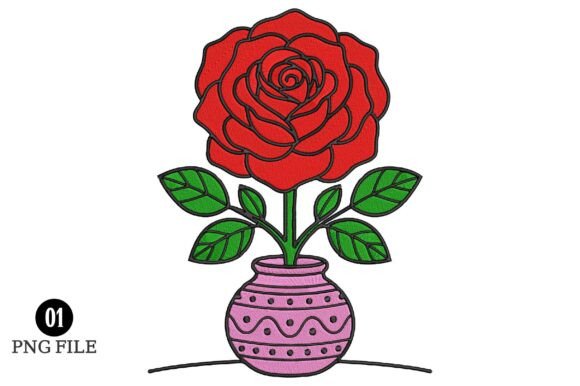
The immediate appeal of the Rose in Pot Embroidery Design lies in its balance between classic botanical illustration and decorative folk art. The description highlights a detailed red rose with green leaves set within a patterned vase, and visually, this creates a strong focal point. For designers working in the Single Flowers category, this specific composition offers more narrative than a standalone bloom. The inclusion of the vase provides a grounded base, making it exceptionally versatile for placement on items like kitchen towels, aprons, and tote bags where vertical centering is crucial.
From a digitizing perspective, the "decorative patterned vase" suggests a mix of stitch types. In my experience, designs featuring intricate vase patterns often utilize complex fill stitches or detailed running stitch outlines to create texture without excessive density. This is a positive indicator for stitching on lighter fabrics. However, the "detailed red rose" implies satin stitch elements or layered fills. As any experienced embroiderer knows, red thread can be unforgiving; if the stitch density is too high, it can cause puckering or needle breaks. When evaluating this embroidery file, I immediately looked for smooth transitions between the floral elements and the container to ensure the design would stitch out cleanly without unnecessary trims or jumps.
Real-World Application: From Tote Bags to Nursery Decor
I considered this design specifically for a mixed-media project involving canvas tote bags and linen tea towels. These substrates are staples in my shop, but they present different challenges. For the tote bag design, the Rose in Pot motif serves as an excellent centerpiece. Canvas is forgiving, allowing for higher stitch counts, which means the detailed rose and patterned vase should render crisply. The visual weight of the pot anchors the design, preventing it from looking lost on the larger surface area of a bag.
For sweatshirt embroidery or custom apparel, the considerations shift. Knit fabrics require careful stabilizer selection to prevent distortion. While this design blends classic aesthetics suitable for boutique merchandise, I would advise testing the stitch density on a scrap of similar fleece or French terry before committing to a full production run. If the vase pattern relies heavily on dense satin stitches, you may need to use a cutaway stabilizer and potentially a water-soluble topping to keep the textured fabric from pushing through the stitches.
This design also shows immense promise for personalized gift items. The space above or below the vase is ideal for adding monograms or names using a complementary script font. For nursery decor or baby blankets, the color palette described—red and green—is traditional, but swapping thread colors to pastels could instantly adapt this machine embroidery design for modern baby markets. Always verify the licensing on the Creative Fabrica product page to confirm you can modify thread colors and sell the finished product commercially.
Technical Considerations for Commercial Embroidery
When integrating any new digital embroidery file into a professional workflow, technical due diligence is non-negotiable. Here are the specific factors I evaluate with the Rose in Pot Embroidery Design:
- Hoop Size Compatibility: Before purchasing, confirm the dimensions match your available hoops. A design that barely fits a 4x4 hoop will have less margin for error than one centered in a 5x7 hoop. For commercial embroidery, having extra space allows for better hooping tension and easier alignment.
- Stitch Density and Fabric Pairing: Detailed roses often require significant thread coverage. If you plan to use this on sheer or lightweight fabrics, check if the design includes underlay stitches. Proper underlay is what prevents the "bulletproof" stiff feeling in embroidered patches and keeps the fabric draping naturally.
- Thread Color Contrast: Red and green are high-contrast colors. On dark fabrics, ensure the design file includes adequate underlay or white base layers so the red rose doesn't get swallowed by the background material. On light fabrics, verify that the green leaves have enough definition to separate from the vase pattern.
- Small Details and Tiny Lettering: If the vase pattern includes minute details, test stitch on scrap fabric first. Sometimes, what looks like exquisite detail on screen becomes a thread nest on cloth. You may need to simplify certain areas if your machine struggles with tight corners or micro-details.
Elevating Product Value and Buyer Trust
Using high-quality design assets directly impacts perceived value. Customers can distinguish between a generic clip-art stitch-out and a thoughtfully composed embroidery piece. The Rose in Pot Embroidery Design, with its blend of floral elegance and decorative structure, signals intentionality. When photographing finished products for Etsy listings or social media, this type of design photographs well because the vase element provides natural framing and symmetry.
For sellers creating printable mockups or marketing materials, the distinct silhouette of a potted rose is easier to visualize on blank products than abstract florals. This clarity helps customers understand exactly what they are buying, reducing return rates and increasing engagement. Furthermore, consistent use of cohesive design styles—like this classic-meets-decorative aesthetic—builds brand recognition. Whether you are selling embroidered patches at a craft fair or listing custom apparel online, maintaining a recognizable visual language fosters buyer trust.
Practical Workflow Notes for Makers
If you decide to add this rose design to your library, treat it as a professional asset requiring validation. Never assume a digital file is ready-to-stitch straight from download. Always perform a test stitch-out on the exact fabric and stabilizer combination you intend to use for the final order. Inspect the back of the sample; clean bobbin work indicates good digitizing, while excessive jumps or bird-nesting suggests you may need to edit the file or adjust your machine tension.
Additionally, review the specific license terms provided by the creator on Creative Fabrica. Licensing for digital embroidery files varies significantly; some allow unlimited sales of finished handmade products, while others restrict mass production or digital redistribution. Understanding these boundaries protects your business and respects the original digitizer's work.
Ultimately, the Rose in Pot Embroidery Design represents a versatile option for makers seeking to expand their Single Flowers repertoire. Its potential applications range from rustic kitchen textiles to refined custom apparel, provided the technical execution matches the visual promise. By approaching this design with professional scrutiny and proper testing protocols, you can confidently transform a digital download into a tangible, profitable, and beautiful handmade product.